The shape of a full IGTAP build
A complete IGTAP save moves through distinct phases, and each one has a different job. Early on you build a production floor: courses with recorded routes, clone armies, and kiosks that raise payout. Mid-game you convert that floor into global power through the statue room and secret upgrades. Late game, watts stop mattering and your build becomes about prestige resources — atoms, gp, and np — the upgrade tree, and refresh orbs.
Thinking in phases stops the most common long-run mistake: spending like you are in phase one when you are actually in phase three. A kiosk purchase that was transformative at megawatts is noise at petawatts, and the game keeps introducing systems — the atom kiosk, the upgrade tree, refresh orbs — precisely so your attention moves up the stack.
This page lays out the long-run production plan. For the purchase-by-purchase sequence inside the early phases, see the upgrade order guide; for what each upgrade family does, see upgrades explained.

Phase one: the production floor
The first phase is about standing up courses that earn while you are not playing them. You record an orange route on a course, post a best time, and buy +Clones until a steady stream of them is running the loop. Each completion pays the base reward through the clone reward multiplier, so the floor is only as good as its times, its clone counts, and its multipliers.
Your own platforming is part of the build. Movement abilities — wall jump, dash, double jump, block polarity swap, teleporters, zip movers, and the omni-dash — are purchased with watts and permanently lower your best times, which raises the completion rate of every clone on every course. A build that neglects abilities has a permanently slower factory.
Phase one ends when the facility's global systems come into view: the red statue room and its Awaken the statue's power (11.09Gw as seen in the official screenshot) and +1 maximum clone speed tier [Global] (475.47Mw as seen in the official screenshot) kiosks. Buying those, plus Boost all previous courses on the kiosk rows (1.20Pw as seen in the official screenshot), is the bridge into phase two — your old courses stop being history and start being income again.
Phase two: globals, secrets, and route optimization
Phase two is where a build starts looking like an optimized factory rather than a collection of courses. Three things dominate it.
First, global upgrades outrank everything local. Maximum clone speed and size tiers raise the ceiling for every clone on every course, and Boost all previous courses revives your whole back catalog at once. Whenever a global is within reach, it is almost certainly your next purchase.
Second, secret upgrades. These are found by exploring rather than bought at kiosks; the first one is the Not all those who wander are lost achievement (92.1% of players) and the full set is Definitely not lost (just 1.1%). Community playthroughs show secrets granting permanent global bonuses such as flat percentage increases to all watts earned, and many are free once you have the movement tech to reach them. Sweep the facility for secrets every time a new ability opens old terrain.
Third, route optimization. Later courses — including the numbered Vman courses tracked by achievements from Deja vu (course 1, 12.6% of players) through Waow... so fast (course 5, 4.7%) — reward tighter lines, and the Reverse Current achievement (1.7%) proves some players re-run everything backwards. Since clones replay your best time forever, an hour of route practice can out-earn an hour of kiosk grinding. One caveat reported by community players: a new best time resets the clones on that course, so plan big purchases around time-attack sessions.
Phase three: the first atom and the prestige loop
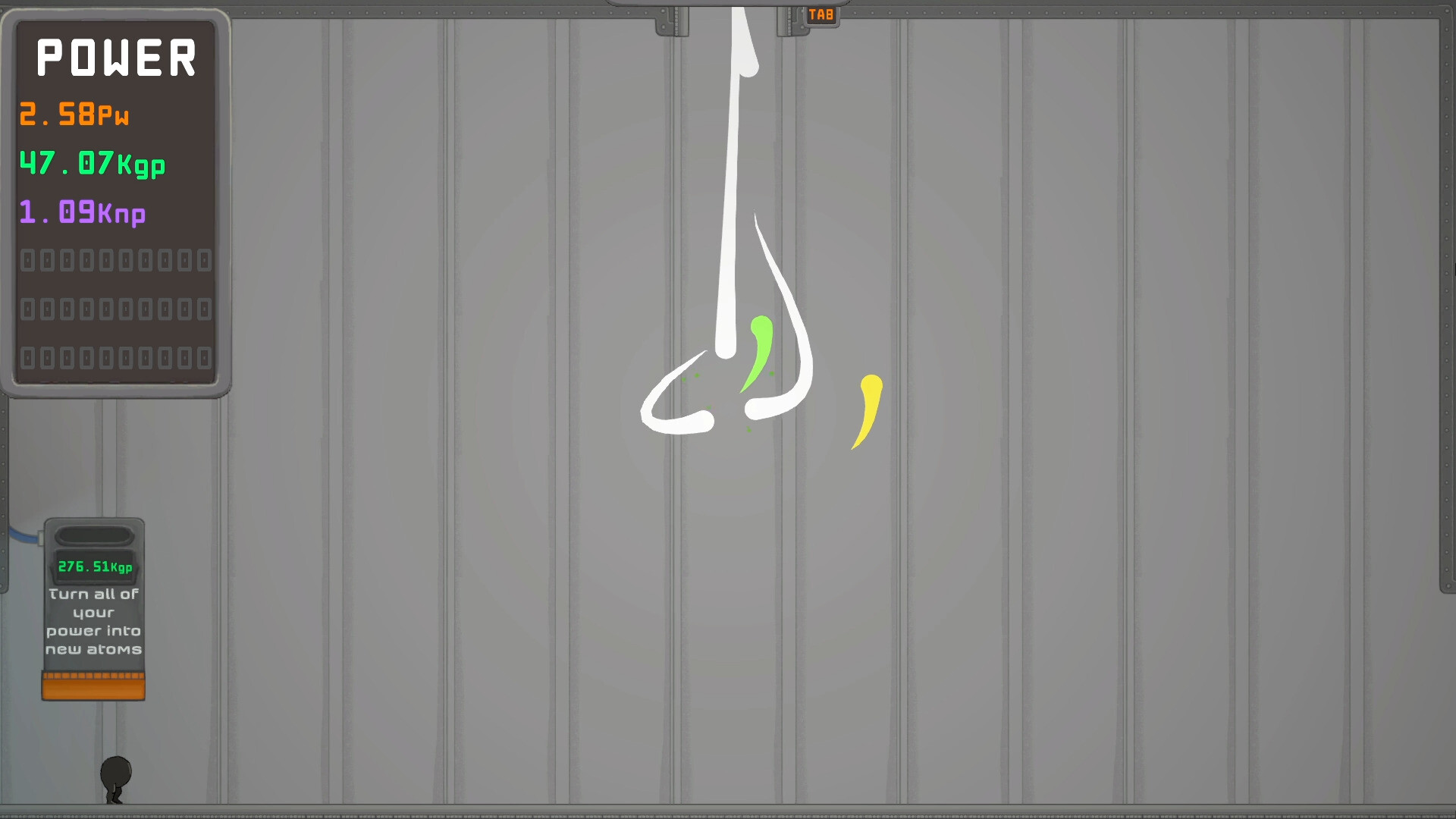
At the top of the watt economy sits the kiosk Turn all of your power into new atoms, priced in gp — 276.51Kgp as seen in the official screenshot. Converting is the game's prestige moment: your first atom earns the I am igtapic. achievement (61.0% of players), and community playthroughs quote the kiosk as resetting watts and course upgrades in exchange, while movement abilities carry over.
A sound long-run conversion policy, drawn from how community players handle it:
- Convert when the reset buys you a meaningful tier of permanent power, not when the kiosk first becomes affordable.
- Before each conversion, spend down on anything that does not reset — abilities, statue globals, reachable secrets.
- After the reset, rebuild fast: your knowledge of the routes plus retained abilities means the early courses collapse in a fraction of the original time.
- Track the green gp and purple np resources on the POWER panel (official names unconfirmed); they belong to the atom economy and fund the upgrade tree.
Each cycle should end with you stronger than the last at the same point in the run. If a reset leaves you progressing slower than before, you converted too early or wasted the run's watts on things that reset.
Phase four: growing the upgrade tree
The upgrade tree is the long-run spine of the build. You plant it with the Exponential growth achievement (60.9% of players) and finish it with Environmental Energy — fully grow the upgrade tree — which only 6.8% of players ever see, making it the clearest marker of a mature save.
Community playthroughs show the tree selling global upgrades for the prestige resources: boosts to overall earning, improved caps, quality-of-life features like buying course upgrades in bulk, and multipliers that dwarf anything the watt kiosks ever offered. The tree is also where refresh-adjacent systems get switched on, so nodes that unlock new mechanics should generally be prioritized over nodes that add raw percentages.
Because the tree is fed by the atom loop, phase three and phase four run in parallel: convert atoms, spend prestige resources on the tree, rebuild watts faster than last cycle, convert again. Your build order at this stage is less a shopping list than a rhythm.
Phase five: refresh orbs and the active endgame
Refresh orbs are unlocked with the Stem Cells achievement (50.4% of players) and represent the endgame's last production system. They sit alongside the facility's other late machinery — zip movers (Metal in motion), teleporters (Collapsing the state), the breaker you trip for the Overdraw achievement (66.8%), and the omni-dash (All angle igtap, 28.5%) — all of which reward an actively played build over a purely idle one.
The endgame build is deliberately hybrid: your clone armies and tree upgrades provide the idle floor, while refresh orbs and course-boost mechanics reward you for playing the platformer yourself. IGTAP's whole premise — an incremental game that is also a platformer — comes to its conclusion here, where skill at the jumps translates directly into production.
The community thumbnail below is from a 100% run built on exactly this endgame loop, pushing clone counts to absurd scale.
Beyond the facility
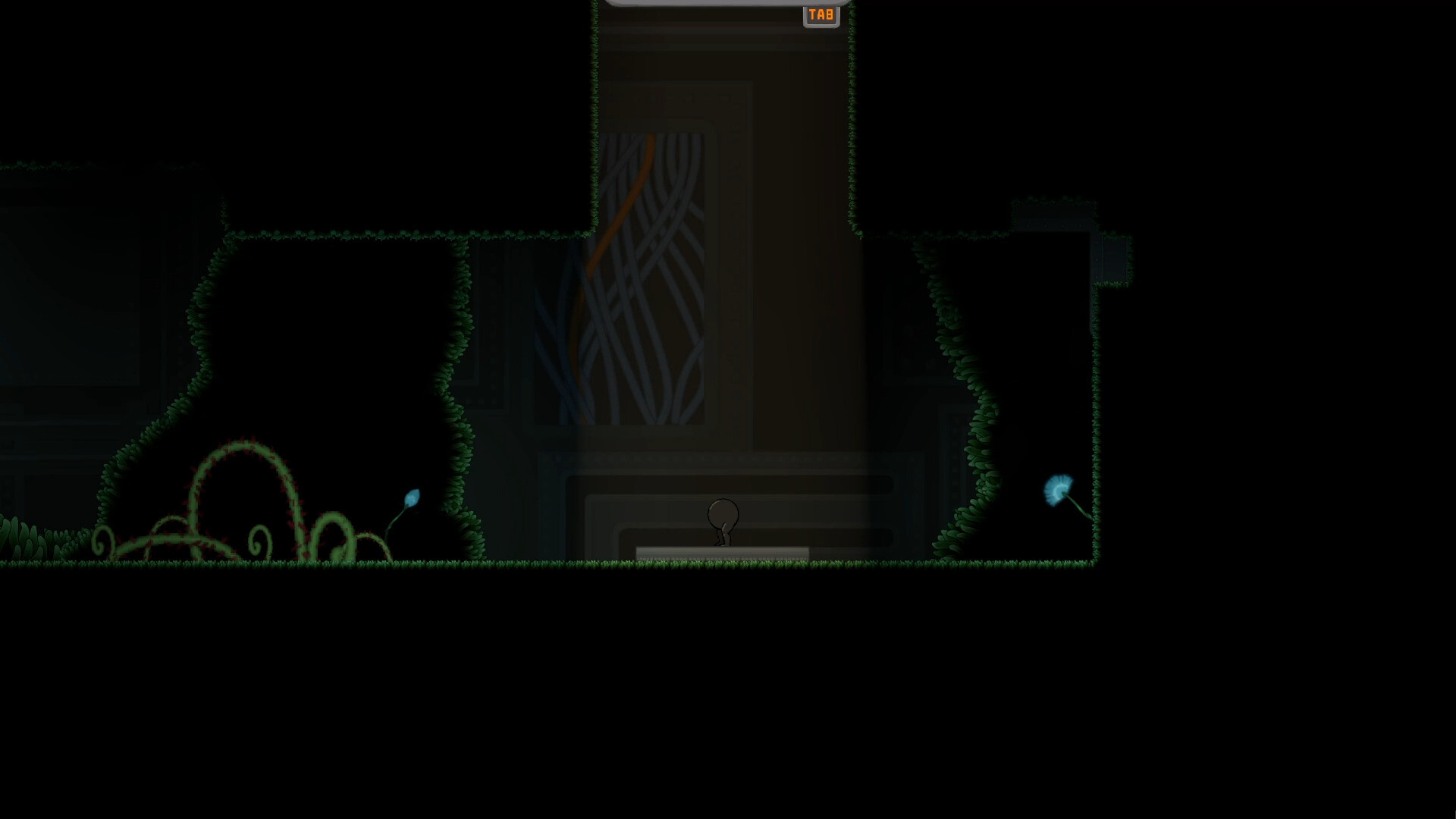
A complete long-run plan leaves room for the content outside the main loop. The achievements point at the full scope: Escape the facility (The greatest adventure is what lies ahead, 5.4% of players), the ominous message inside the Vman speedrun (Quam Formidolosum, 0.5%), and the remaining secret-upgrade sweep. Community players also describe a dark garden area beyond the facility walls and a harder B-Side challenge, though the B-Side's official status is unconfirmed.
Sequence-wise, none of this changes the build order — it extends it. The facility phases give you the production to afford everything; the outer content gives you the permanent bonuses and completions that make each prestige cycle stronger. When your save can idle at petawatt scale, the last upgrades worth chasing are the ones you have to jump for.