
The watts-per-hour mindset
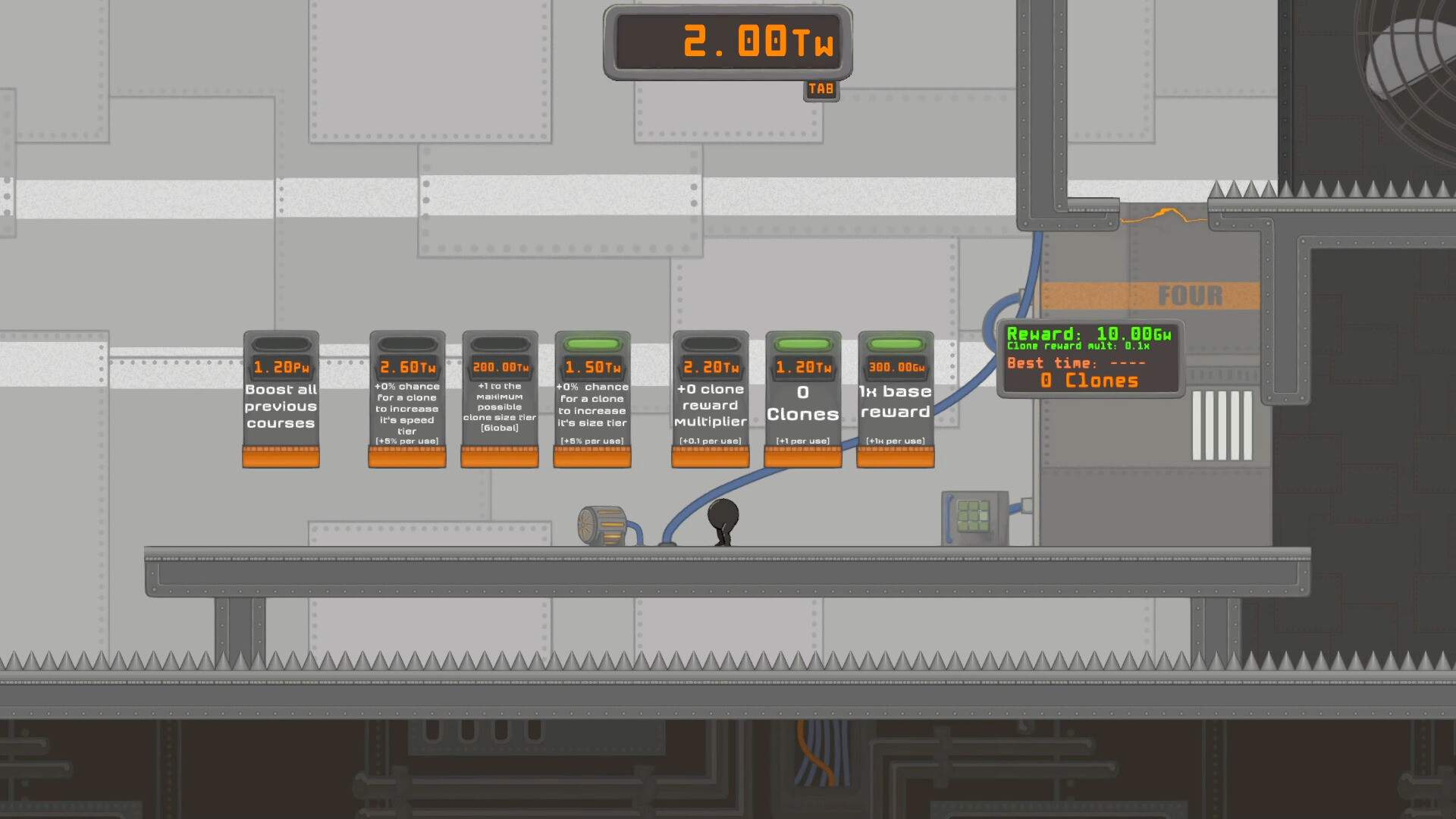
Power in IGTAP is measured in watts (w), displayed with K/M/G/T/P suffixes — official screenshots show values from a humble 2w up to 475.47Mw and 2.00Tw. Almost everything you want in the game is bought with watts, so the core farming question is simple: how many watts does your setup produce per hour, and what purchase raises that number the most?
Your income is a product, not a sum. Roughly speaking, it scales with how many clones you have, how fast they complete your recorded routes, how valuable each completion is (reward multipliers), and how many courses are running for you at once. Farming well means growing all four factors instead of pouring everything into one.
Clone count is the base multiplier
The most direct lever is the kiosk reading "+X Clones [+1 per use]" — one more clone on your routes with every purchase. Clone count multiplies everything else: a route earning well per lap is worth twice as much with twice the clones. The community has pushed this to absurd extremes, with video titles like "I abused 1,000,000 clones for eternity" and "I Beat IGTAP with TRILLIONS of Clones" showing how far the army can grow.
Early on, clone purchases are the obvious spend. Later, when clone count gets expensive, the marginal watt often comes from making each existing clone faster or each completion worth more — which is what the tier and multiplier kiosks are for.

Speed tiers and size tiers
Two chance-based upgrade families appear verbatim on official kiosks: "+X% chance for a clone to increase it's speed tier [+6% per use]" and "+X% chance for a clone to increase it's size tier [+6% per use]". Each purchase adds six percentage points of chance for clones to move up a tier, so the population of high-tier clones grows as you keep buying.
Speed tiers make clones complete routes faster; size tiers are the second axis of clone quality, with "+1 to the maximum possible clone size tier [Global]" raising the ceiling for every clone. Because these upgrades work probabilistically across your whole army, their value compounds with clone count — a large clone base turns "+6% chance" into a lot of actual tier-ups.
Clone reward multiplier and base reward
Income per completion is controlled by two more kiosks. The settlement panel shows a "Clone reward mult" (0.1x in an early official screenshot), and a kiosk adds "+X clone reward multiplier [+0.1 per use]". A second kiosk grants "Xx base reward [+1x per use]". Raising these turns the same routes into bigger paychecks without touching route times at all.
There is also a kiosk reading "Boost all previous courses" — one of the most important purchases in the game for farmers, because it means your old, already-optimised routes keep scaling with your late-game income instead of falling behind. Never write off an early course; boosted, it stays part of your economy.
The statue room: global tiers and big spends
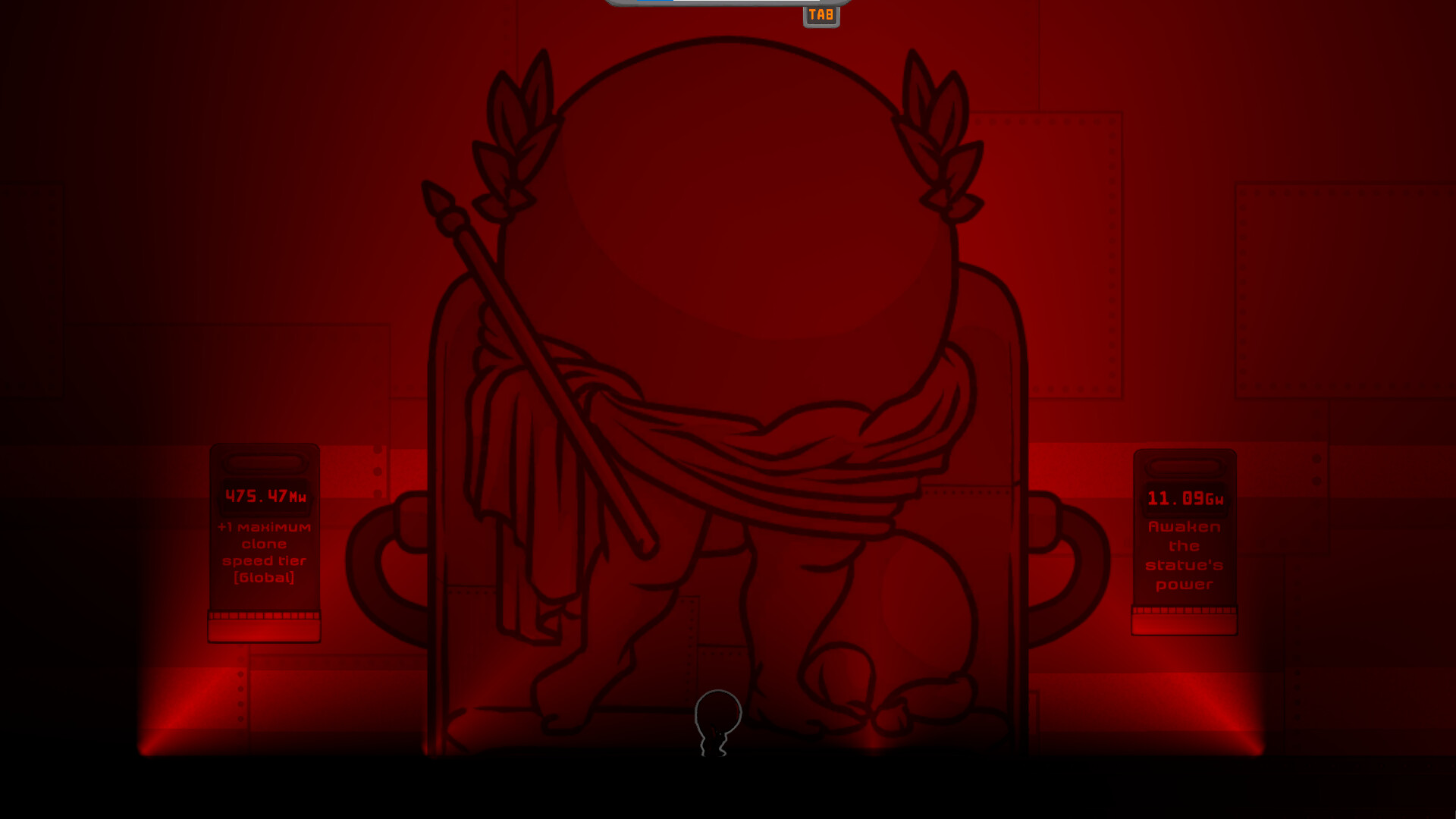
The red statue room holds the premium farming upgrades. Official screenshots show two kiosks there: "+1 maximum clone speed tier [Global]" priced at 475.47Mw, and "Awaken the statue's power" priced at 11.09Gw. The global speed tier ceiling lifts every clone on every route at once, which is why it is a landmark mid-game goal worth saving for.
What "Awaken the statue's power" does in full is not documented in verified official sources, so this wiki will not guess at its exact effect — but its price tag (billions of watts) marks it as a major late-game milestone purchase. Budget for it the way you would budget for a prestige item in other incremental games.
Route speed is a farming stat
Farming guides often ignore platforming; in IGTAP you cannot. Your clones replay the exact route you recorded, so a shorter Best time directly raises completions per hour for every clone you own. Community videos make this the whole premise — one is literally titled "parkour skills determine how fast you make money."
The synergy runs both ways. Watts buy clone count and tiers, which buy more watts; better routes multiply all of it. After any new movement ability (wall jump, dash, double jump, polarity swap, omni-dash) or after discovering a spring, zip mover or teleporter shortcut, re-running your highest-traffic courses is usually a better watt investment than the next kiosk purchase.
A practical farming loop
- Keep every cleared course running — clones on old routes earn while you platform on new ones.
- Compare kiosk prices against your current watts-per-hour; buy whichever lever (clones, multiplier, tier chance) has the shortest payback.
- Prioritise "Boost all previous courses" and the statue room global speed tier when they come into range.
- Re-record your two or three best courses after each ability unlock to cut Best times.
- Watch the POWER panel's other resources (green gp and purple np) — they feed the deeper systems covered in our optimization guide, including atoms.
Power farming is the engine of the whole game; the optimization guide continues from here into atoms, refresh orbs and the upgrade tree.