
Why route speed matters
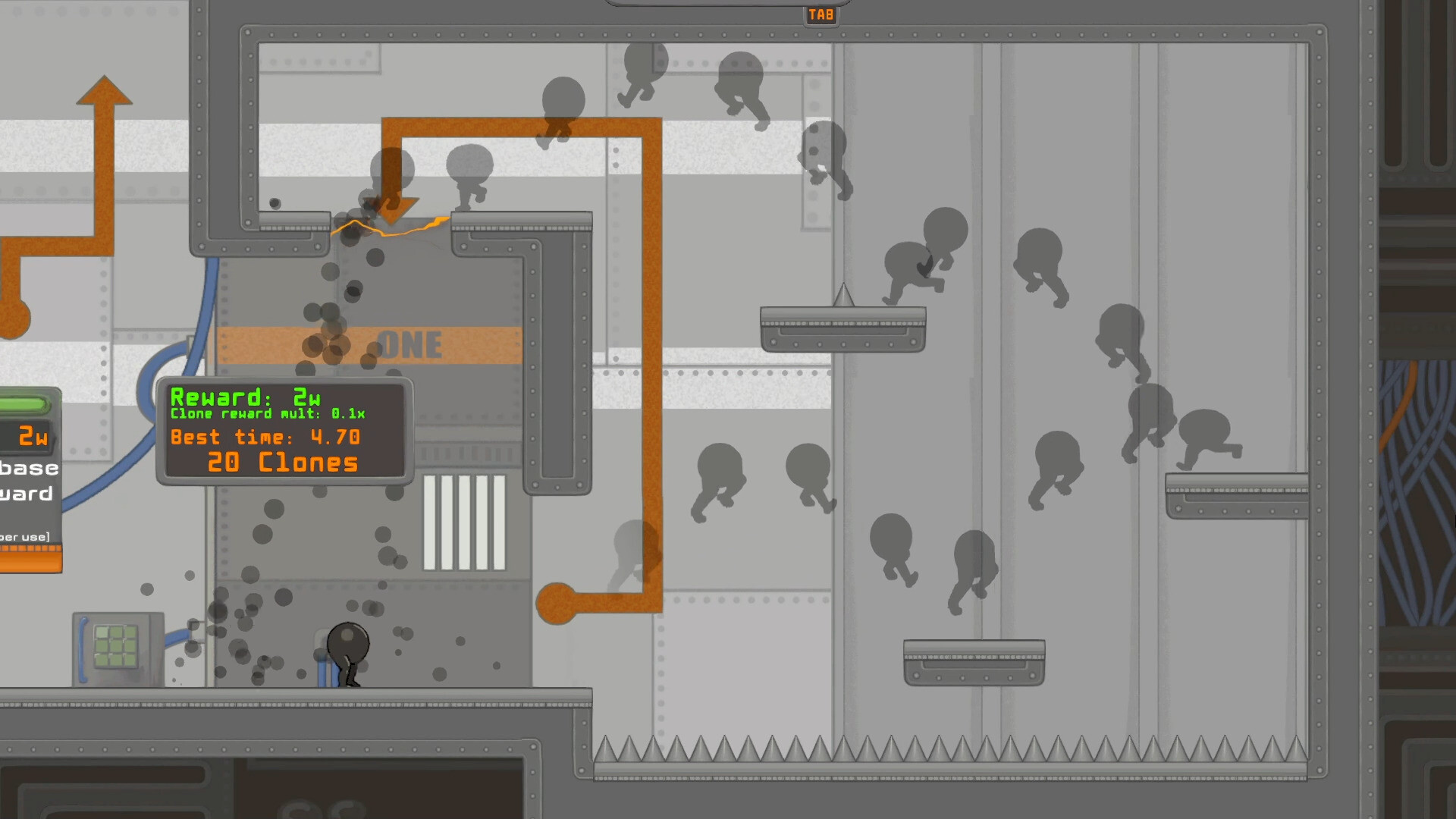
Every course settlement panel tracks a Best time — the official screenshot for course ONE shows 4.70 — and in a game where clones replay your recorded path to generate watts, time is literally money. A route that is twenty percent shorter means every clone completes twenty percent more laps per minute, multiplying across your whole clone army and every course you have ever recorded.
The community frames this well: one popular video's title is "parkour skills determine how fast you make money." Optimising routes is the single highest-leverage skill in IGTAP because the payoff is permanent and passive. Unlike kiosk upgrades, which cost escalating watts, a faster line costs nothing but practice.
Movement abilities that shorten routes
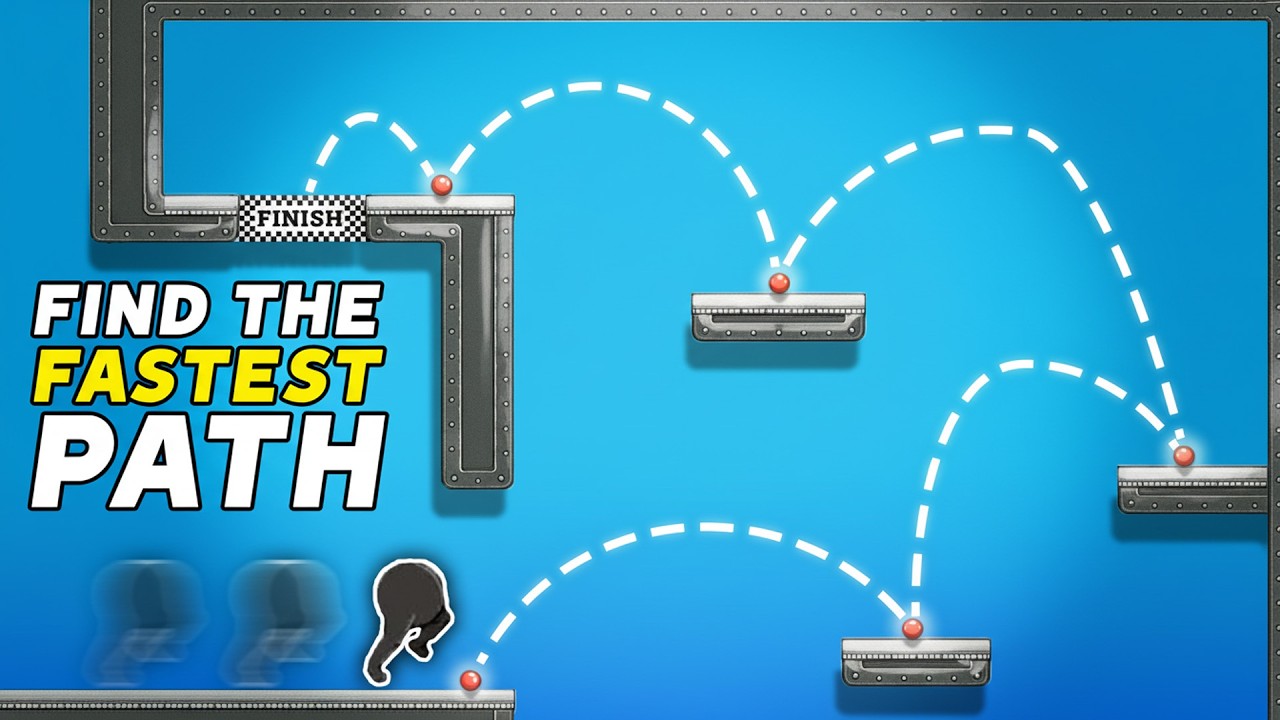
The verified ability set — wall jump, dash (Spintap), double jump (Jump, but again.), block polarity swap (Polar increments) and the omni-dash (All angle igtap) — each unlocks shorter lines through a course:
- Wall jump turns dead-end vertical shafts into shortcuts and removes long detours around them.
- Dash and the omni-dash convert falling arcs into direct horizontal or diagonal travel, clipping corners that a plain jump route must respect.
- Double jump extends every gap you can cross, letting routes skip intermediate platforms entirely.
- Polarity swap interacts with marked blocks to redirect momentum, opening lines that ignore the "obvious" path.
The key habit: after every ability unlock, replay older courses and look for the section that originally forced the biggest detour. That section is almost always where the most time is hiding.
Springs, zip movers and teleporters are free speed
Course helpers exist to be exploited. Springs launch you further than any jump — enough that the game has an achievement, Igtap want boing boing, for bouncing on ten without touching the ground, which is exactly the mindset a fast route needs: chain launchers instead of running the floor.
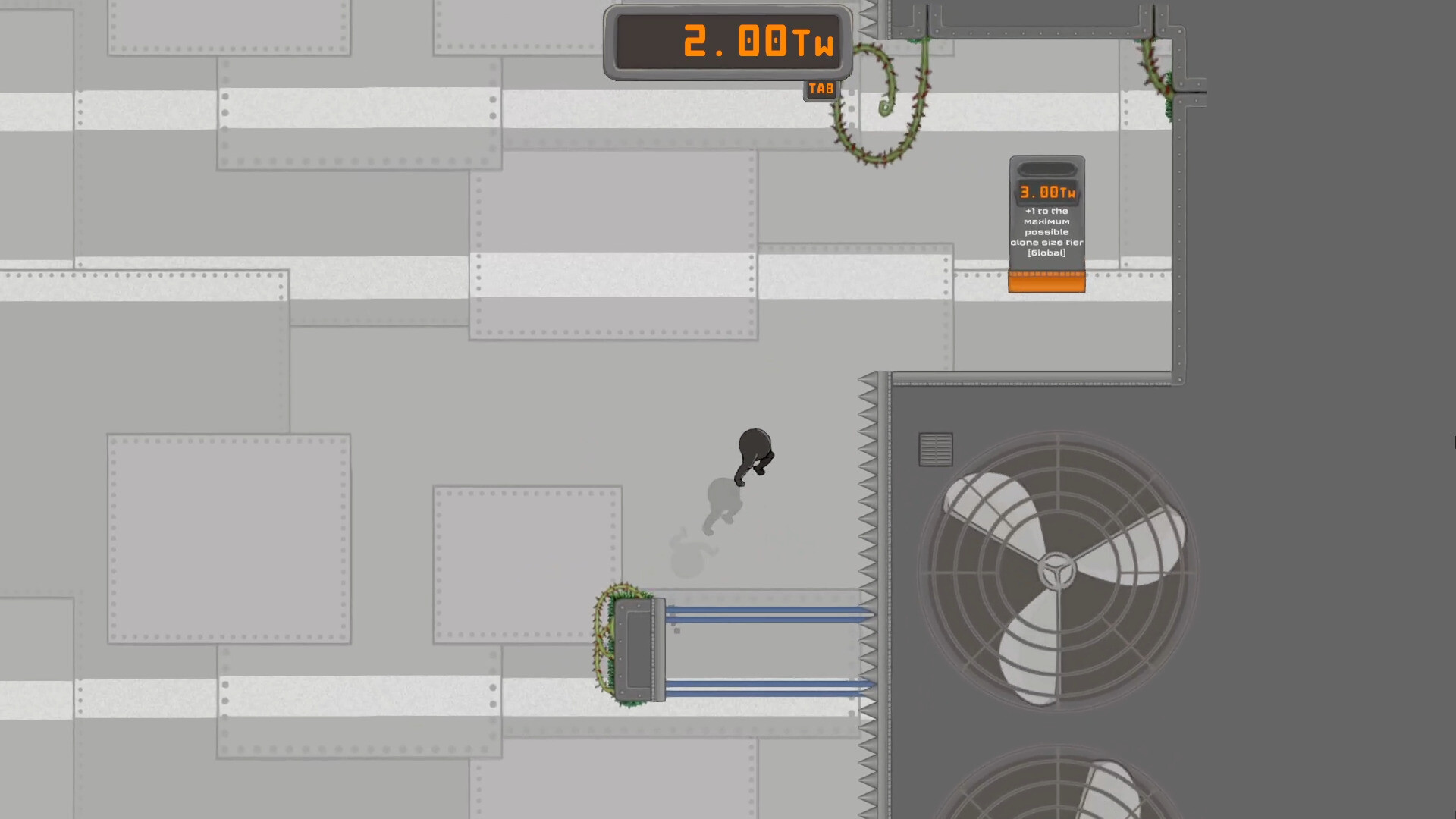
Zip movers carry you along fixed rails at high speed; official screenshots show blue rails running straight through hazard-filled sections, so the fastest route usually rides the rail rather than platforming underneath it. Teleporters (Collapsing the state) are the biggest single time-saver of all when a course offers one, collapsing a whole stretch of level into a step. Moving platforms are slower but predictable — time your recording so clones board them without waiting.
The risk trade-off: consistency beats heroics
Spikes, thorn vines and giant fans punish aggressive lines, and IGTAP expects you to die — the achievement list runs from Tis but a flesh wound (first death) through 100 and 500 deaths. A route only pays out if clones can complete it, so the fastest route is the fastest route that does not fail.
In practice that means: prefer one safe landing over two frame-perfect dashes; keep a margin on jumps over fans; and if a shortcut depends on a pixel-perfect wall jump, weigh whether the saved seconds justify a lower completion rate across thousands of clone laps. Speedrunners optimising for a single attempt and farmers optimising for endless replays have different risk appetites — decide which run you are recording before you commit.
How fast can a course get?
Community results give a rough ceiling. A video titled "IGTAP world record 1:34 level 1 05/03/2026" reports a 1:34 clear of the first level as of May 2026 — community-reported, not officially certified. Speedrun.com/IGTAP hosts level categories where community-listed top runs for early levels sit in the one-to-five-second range under restricted rulesets. These numbers show how much time competitive players find in courses that look straightforward on a first playthrough.
You do not need world-record lines to benefit. Going from a wandering first recording to a purposeful second one typically cuts large fractions of the time, and every cut compounds across your clone count.
A practical optimisation checklist
- Run the course once at a comfortable pace just to learn the hazards and note every spring, zip mover, teleporter and moving platform.
- Identify the biggest detour — the section where the level forces you to go around rather than through.
- Check whether an ability (wall jump, dash, double jump, polarity swap, omni-dash) or a helper now solves that detour directly.
- Record the aggressive line, but keep safe fallbacks at the two or three most lethal hazards.
- Compare the new Best time against your old one on the settlement panel; keep iterating on the worst section only.
- Revisit after each new ability, each statue-room global tier upgrade, and any "Boost all previous courses" purchase.
Optimising route time feeds directly into the watts economy — for how to convert that speed into maximum power per hour, continue with the power farming guide, or see the speedrun guide if you want to race the clock yourself.