What a route is
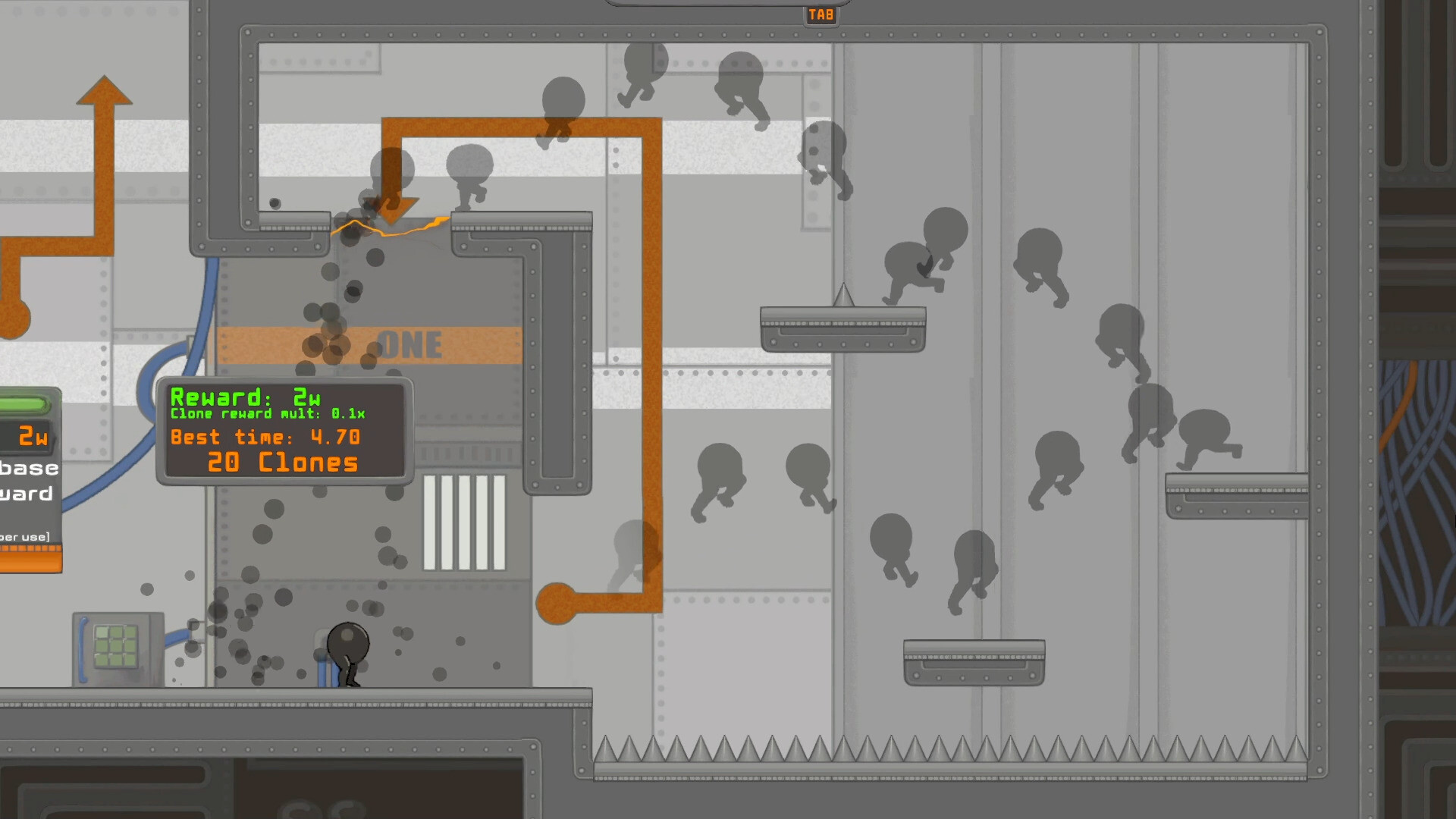
A route in IGTAP is a recorded path through a course. When you run a course, the game traces your movement as a visible orange line, and that line becomes the track your clones follow automatically. The official Steam description puts it plainly: you amass an army of clones to follow your tightly-optimised path, generating power while you focus on other things.
This is the mechanic that makes IGTAP both a platformer and an incremental game. The platforming skill you spend recording a good route is converted directly into long-term watts-per-hour income. A route is not decoration — it is your production line.
How recording works
You record a route simply by completing the course. The orange path line shown in official screenshots snakes through the level past spikes and over moving platforms, marking every jump and landing you made. When you finish, the settlement panel reports the result: Reward in watts, Clone reward mult, your Best time (for example 4.70), and how many clones are now running it (for example 20 Clones).
Two properties of the recording matter for planning:
- It captures your actual movement, so hesitant play, backtracking and slow sections get baked in permanently until you re-record.
- Best time is tracked per course, which gives you a built-in benchmark for whether a new recording is an improvement.
If you fumble a section badly, the practical answer is to run the course again more cleanly and aim for a better Best time. Verified sources do not spell out every detail of how re-records replace old paths, but the per-course Best time field shows the game is built around improving on your own lines.
How clones follow the route
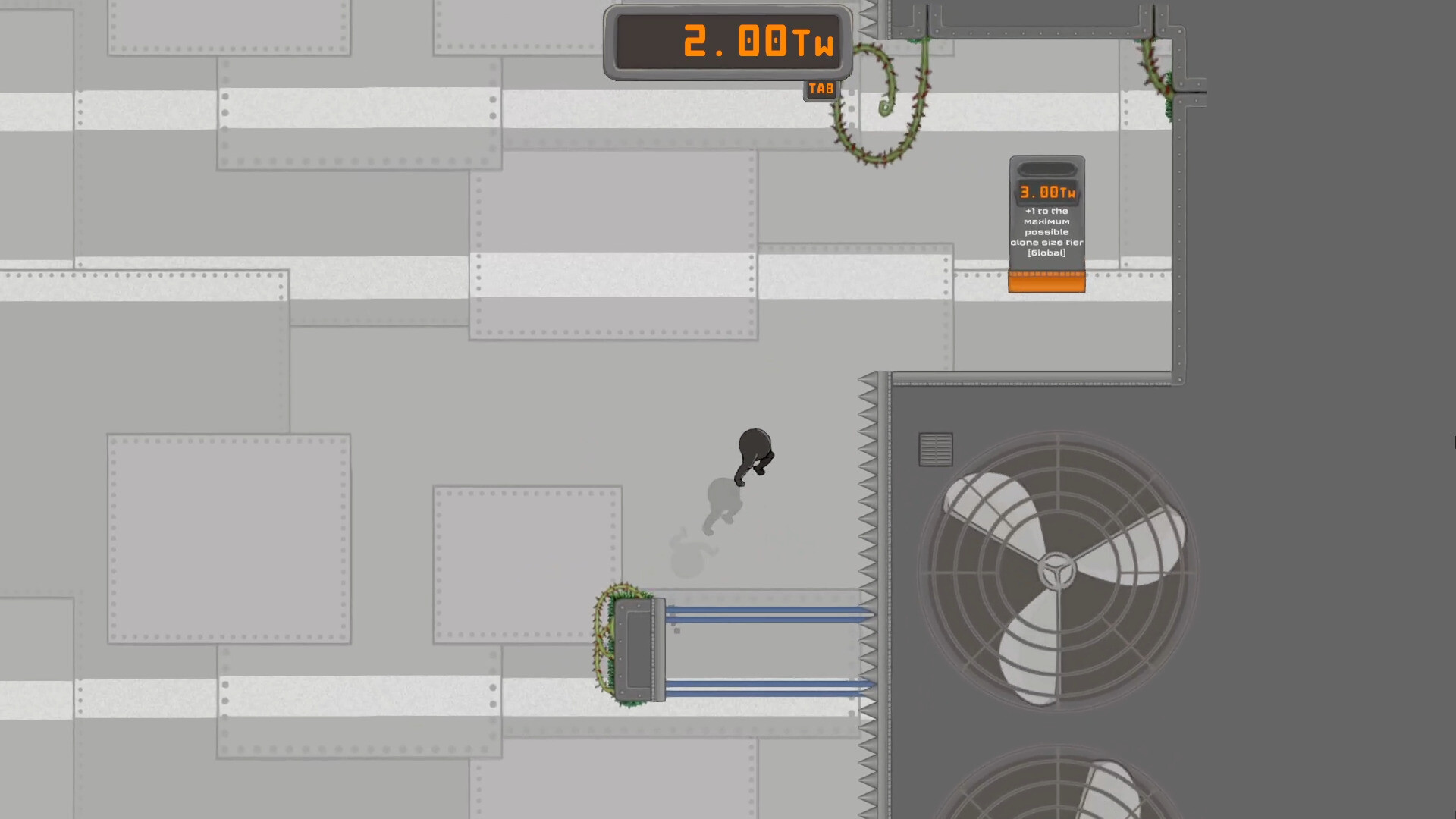
Once recorded, clones replay the route on their own, endlessly. Each clone that completes the path earns watts, scaled by your clone reward multiplier — the settlement panel shows this multiplier (0.1x in an early official screenshot) and kiosks can raise it by +0.1 per use. Clone count itself grows too: a kiosk adds +1 clone per use, and the screenshot of a later course shows the counter at values like 2.00Tw of accumulated power.
Clones are not just number-crunchers on a screen; they physically run the orange line in the level, which is why route quality matters so much. A shorter, faster route means every clone completes more laps in the same amount of real time.
Clone count, speed tier and size tier
Three upgrade axes determine how productive your routes are, and all three appear verbatim on official kiosks:
- Clone count — "+X Clones [+1 per use]". More clones on the same route means more completions per minute.
- Speed tier — "+X% chance for a clone to increase it's speed tier [+6% per use]", plus a global "+1 maximum clone speed tier" kiosk in the red statue room (475.47Mw in the official screenshot). Faster clones lap the route sooner.
- Size tier — "+X% chance for a clone to increase it's size tier [+6% per use]" and "+1 to the maximum possible clone size tier [Global]".
The chance-based wording is important: speed and size tier upgrades raise the probability that an individual clone tiers up, and the global kiosks raise the ceiling. Community players have pushed these systems to extremes — videos with titles like "I abused 1,000,000 clones for eternity" and "I 100% IGTAP By Making 1 Quadrillion Clones" show the scale the clone economy can reach.
Hazards, helpers and route design
Routes exist inside real platforming levels, so their shape is dictated by the course's hazards and helpers. Spikes, thorn vines and giant fans punish sloppy lines; springs, zip movers, teleporters and moving platforms let a good route cross large distances quickly. The zip mover rails in official screenshots are a prime example: riding them is faster and safer than any jump chain you could record beneath them.
Movement abilities expand what a route can look like. Wall jump, dash, double jump, polarity swap and the omni-dash each open shorter lines through a course. A route recorded before you own the dash is almost always worth re-recording afterwards.
Iterating on your routes
Treat every route as a draft. The improvement loop looks like this:
- Complete the course and note the settlement panel's Best time and clone count.
- Spend watts on clone count and reward multiplier kiosks while the route farms passively.
- Re-run the course using newly unlocked abilities or helpers you previously ignored.
- Compare Best time — if it dropped, your clones are now earning faster on every lap.
- Repeat after each major upgrade, especially anything labelled "Boost all previous courses".
Because old courses keep paying out, iterating on early routes is rarely wasted effort. For concrete techniques to shave seconds off a recording, see our fastest route guide; for how the whole economy scales, see power farming.